
Photofacials and Sun Damage Explained
A dark patch on the cheek or forehead tempts many readers to treat it alone. This page explains photofacials and sun damage, and marks where home care ends.
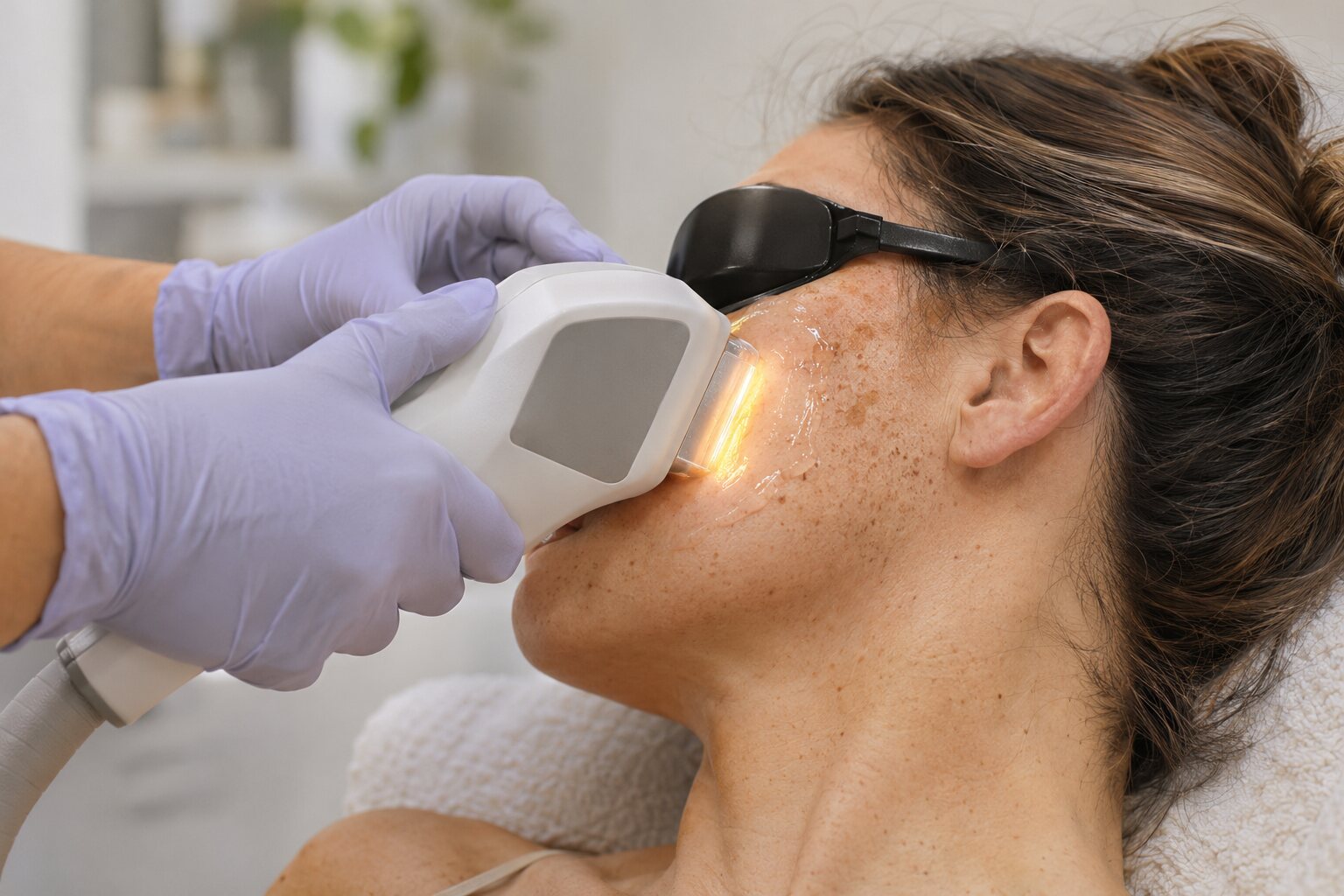
WebMD describes intense pulsed light (IPL) therapy, also known as a photofacial, as a way to improve the color and texture of your skin without surgery. Healthline describes broadband light (BBL) therapy as a type of pulsed light treatment that stimulates collagen production and may help reduce the appearance of sun damage, rosacea, acne, fine lines, age spots, melasma, and uneven skin tone.
Both are light-based treatments, and a licensed professional is the safer person to judge which one suits your skin. A review of physician-directed lasers, chemical peels and other noninvasive modalities shows how clinicians group these options.
From a pharmacy cream to a full light treatment
- Home and Clinic Options for Age Spots is the gentlest question, a comparison of what you can try and what a clinic offers.
- Removing Age Spots With Light and Creams compares light treatment with creams.
- Liver Spots and When to Treat Them covers when a spot is worth treating.
- Forever Young BBL for Aging Skin covers a full light treatment, the highest-risk page here.
Before you buy a cream
Start with the home and clinic comparison before you buy anything. If a spot has changed or bothers you, have a professional look at it before any treatment.
For a sense of how researchers test light on photoaged skin, see this split-face study of ablative fractional laser combined with intense pulsed light.